
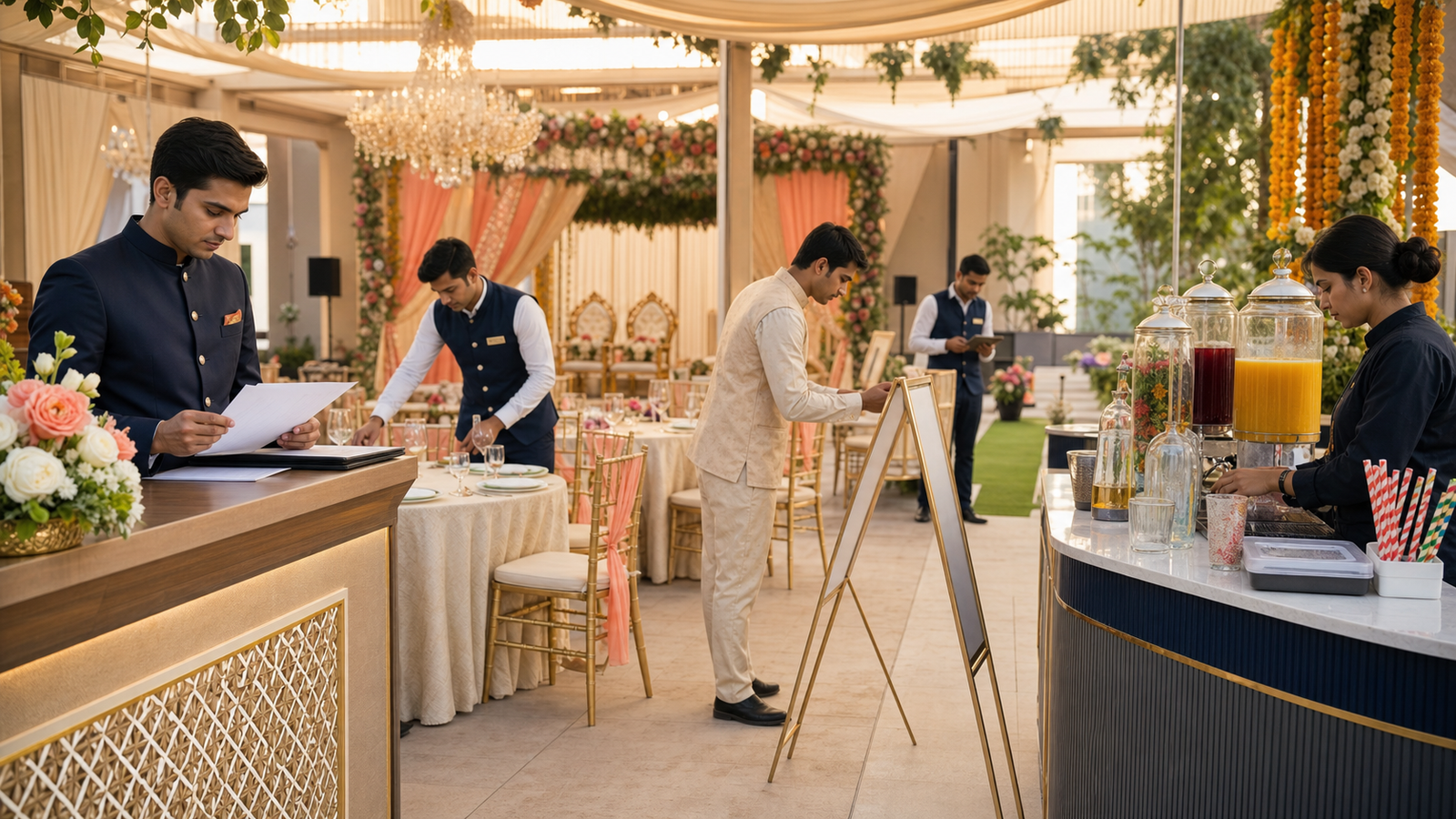
Plan each wedding function separately
A wedding may include a haldi, mehendi, sangeet, ceremony and reception, each with a different venue, guest count and service pattern. Copying one staffing plan across every function can leave busy periods unsupported or create unnecessary coverage during simpler gatherings.
Write down the timing, expected attendance, venue zones, food format and main activities for each function. Then choose roles from the work that must happen rather than treating the wedding as one continuous event.
Hosts support a smooth guest arrival
Hosts or hostesses can welcome guests, guide them toward the correct area, support registration or room information and answer basic venue questions. They are especially helpful at large properties, venues with several halls or functions where different guest groups arrive through separate entrances.
Give the welcome team an accurate schedule, venue map and escalation contact. They should know where to direct questions about seating, accommodation, gifts, transport and family-specific arrangements without making decisions outside their brief.
Waiters provide guest-facing food service
Waiters may support welcome refreshments, table service, buffet circulation, water service and clearing. The quantity depends on guest count, meal format, number of service areas, walking distance and whether the caterer already includes an adequate service team.
Confirm the boundary between separately booked waiters and catering personnel. Identify who provides trays and serviceware, who briefs the menu, who supervises each zone and whether closing cleanup is part of the agreed shift.
Bartenders and beverage attendants need a defined counter
A beverage team can prepare and serve the agreed menu, maintain the counter and coordinate restocking. A simple juice or mocktail station requires different coverage from several made-to-order counters operating throughout a long reception.
Share the menu, service hours, equipment and expected guest volume in advance. Alcohol service must follow venue requirements, applicable law and appropriate age and safety controls; never leave those responsibilities implied.
Event helpers cover planned operational tasks
Event helpers can support defined tasks such as preparing welcome materials, checking guest-service zones, moving permitted supplies or helping a coordinator maintain the event timeline. They can be valuable when several small operational duties need attention at once.
Flexible does not mean unlimited. Do not redirect helpers into electrical work, heavy equipment handling, private security, cash control, food preparation or another specialist responsibility they were not engaged and equipped to perform.
Housekeeping coverage protects comfort throughout the function
Wedding venues can generate continuous clearing and cleaning work across dining, washroom, dressing and outdoor areas. Confirm what the venue already provides and whether its team covers only the property or also the temporary event setup.
If additional housekeeping is required, define the zones, shift and waste-handling process. Make cleaning supplies, disposal points and venue rules available so the team can work safely without interrupting guests.
Specialist roles depend on the venue and programme
A bouncer or licensed security provider may be appropriate for access control or crowd-management needs, but ordinary event staff should not be presented as security. DJs, decorators, chefs and equipment technicians are also specialist suppliers with their own responsibilities.
Review what the venue and each contracted vendor already includes before adding a role. Clear supplier boundaries prevent duplicate charges and stop important work from falling into the gap between teams.
Use zones and leads for a larger wedding
When a venue includes a welcome area, ceremony space, dining hall, beverage counters and outdoor sections, divide the service plan into zones. Assign professionals to each zone and nominate a lead who can see the overall requirement.
The lead should have the latest schedule and know the authorised family or planner contact. If guest flow changes or one area becomes unexpectedly busy, that structure makes it easier to rebalance support without sending conflicting instructions.
Include setup, breaks and closing time
The shift should reflect the complete workload, not only the ceremony or reception time printed on the invitation. Staff may need to report early for access, uniform checks, briefing and preparation, then remain for clearing or an agreed venue reset.
Long or back-to-back functions also require realistic breaks, meals, drinking water and travel planning. Discuss extensions and overtime terms before the event instead of assuming the team can remain indefinitely when the programme runs late.
Create one written wedding staffing brief
For each function, record the address, access point, reporting and finish times, guest count, selected roles, quantities, dress, tasks, zone assignments and on-site contacts. Add the caterer, venue and planner leads where their work intersects with the staffing team.
Reconfirm the final version after major RSVP, venue or schedule changes. A clear brief gives every professional a practical view of the event and allows the family to focus on the celebration rather than resolving avoidable role confusion.