
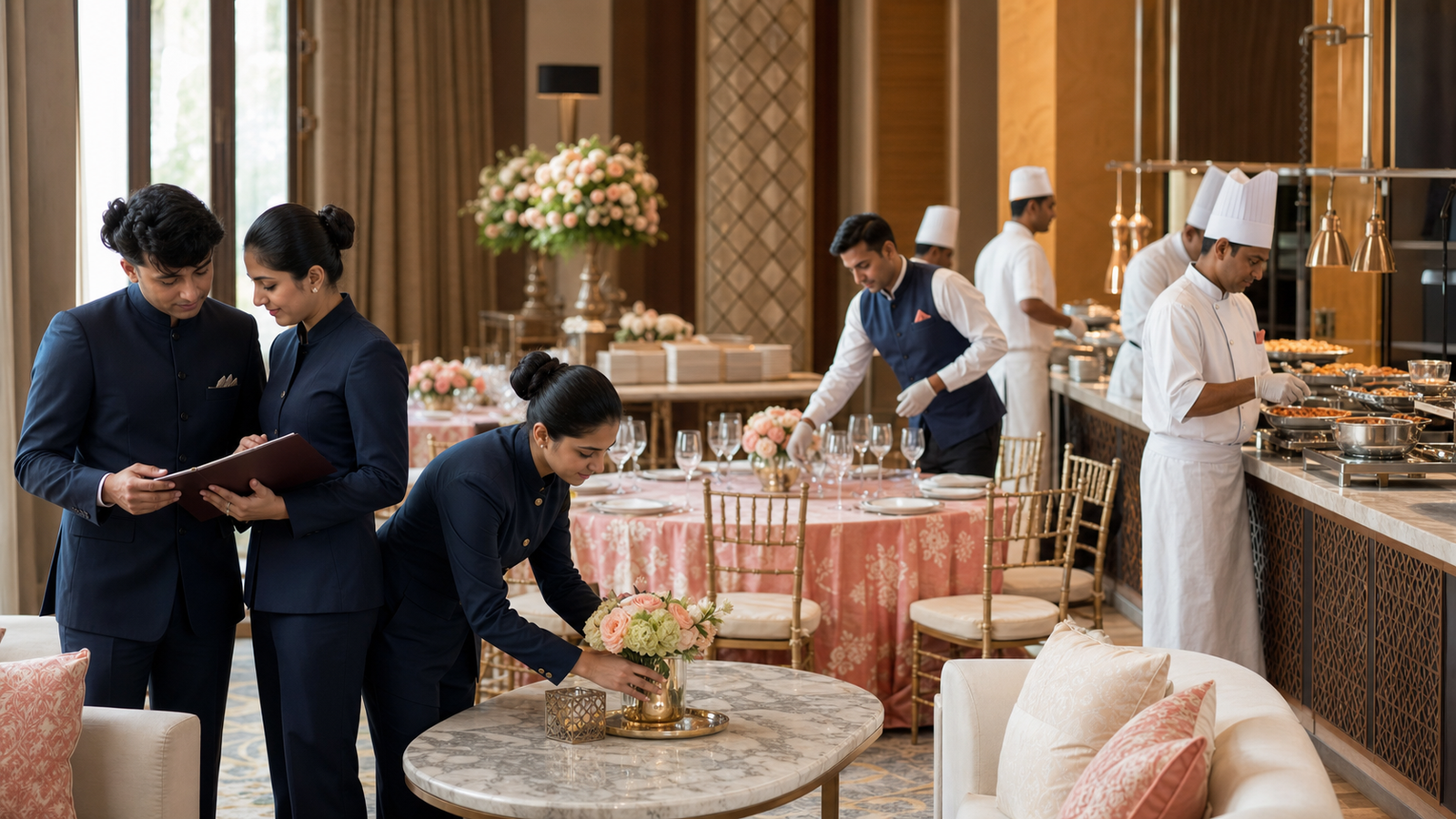
The two teams support different parts of the event
Event staff is a broad term for professionals who help operate the guest experience and venue. Depending on the requirement, this can include hosts, event helpers, waiters, bartenders, housekeeping professionals, bouncers and other defined roles.
Catering staff focuses on the preparation, handling, presentation and service of food and beverages supplied by a caterer. The teams often work side by side, but hiring one does not automatically mean every responsibility of the other is included.
What catering staff usually handles
A catering team may include chefs, kitchen assistants, counter attendants, captains and service personnel. Its responsibilities can cover food preparation, transport, temperature control, buffet setup, replenishment and service according to the caterer’s agreed scope.
The exact package matters. Some caterers provide a complete service team, while others supply food, equipment and only a small counter crew. Ask for role quantities and duties in writing instead of relying on the word “catering” to describe everything.
What event staff usually handles
Guest-facing event staff can welcome attendees, guide them through the venue, coordinate queues, assist with seating, support activities, clear service areas or complete other assigned operational tasks. Their work should be defined by role, timing and venue needs.
Event helpers are not automatically chefs, security guards, decorators or equipment technicians. A flexible support role still needs clear boundaries so professionals are not redirected into unsafe or specialist work after arrival.
Waiters can come from either arrangement
Waiters are the main area of overlap. A caterer may include waiters who understand its menu, equipment and service sequence. A host may also arrange waiters separately when the caterer supplies food but does not provide enough guest-facing service.
Confirm who will brief and supervise them, who supplies trays or service equipment, and whether their work includes serving, clearing, water service, buffet support or closing cleanup. Avoid counting the same people in both the catering and event staffing plans.
Food handling requires explicit coordination
The caterer should explain which tasks require its trained personnel and what outside event staff may safely support. Food preparation, temperature-sensitive storage, specialised equipment and allergen controls should remain with appropriately capable people.
If separately booked staff will carry plated food, replenish a counter or collect used serviceware, agree on the handoff before the event. The catering lead and staffing lead should share the same service timeline and escalation contact.
Common gaps appear between the two scopes
Problems arise when each team assumes the other will handle water, glass collection, guest directions, table clearing, waste movement or the final reset. These tasks may look small individually but can affect the entire guest experience when nobody owns them.
Walk through the event from setup to closing and assign every recurring task to a named team or role. If a responsibility is not included in either quotation, decide whether to add coverage or simplify the plan.
Build one combined staffing plan
List the caterer’s team by role and shift, then list any separately arranged event professionals. Compare both lists against the guest count, service style, number of counters, venue zones and busiest periods.
Nominate one authorised host contact, one catering lead and, for a larger event team, one staffing lead. They should know how to reach each other and who can approve a practical change when service conditions differ from the plan.
Questions to ask before confirming
Ask the caterer exactly how many chefs, counter attendants, captains and waiters are included; what equipment it provides; and which setup, service and cleanup tasks are covered. Ask the staffing provider the same questions for each separately booked role.
Record reporting times, dress requirements, meal and break arrangements, venue access, supervision and closing responsibilities. Clear answers make it easier to compare proposals and prevent unexpected requests on the event day.
Choose roles from the work, not the label
You may need a full catering team, separate event staff or a coordinated combination of both. The right arrangement depends on what each supplier actually provides and how guests will be served throughout the venue.
Treat every role as a set of defined tasks. When the catering and event staffing scopes meet cleanly, both teams can focus on their expertise and the host is less likely to discover an operational gap after guests arrive.