
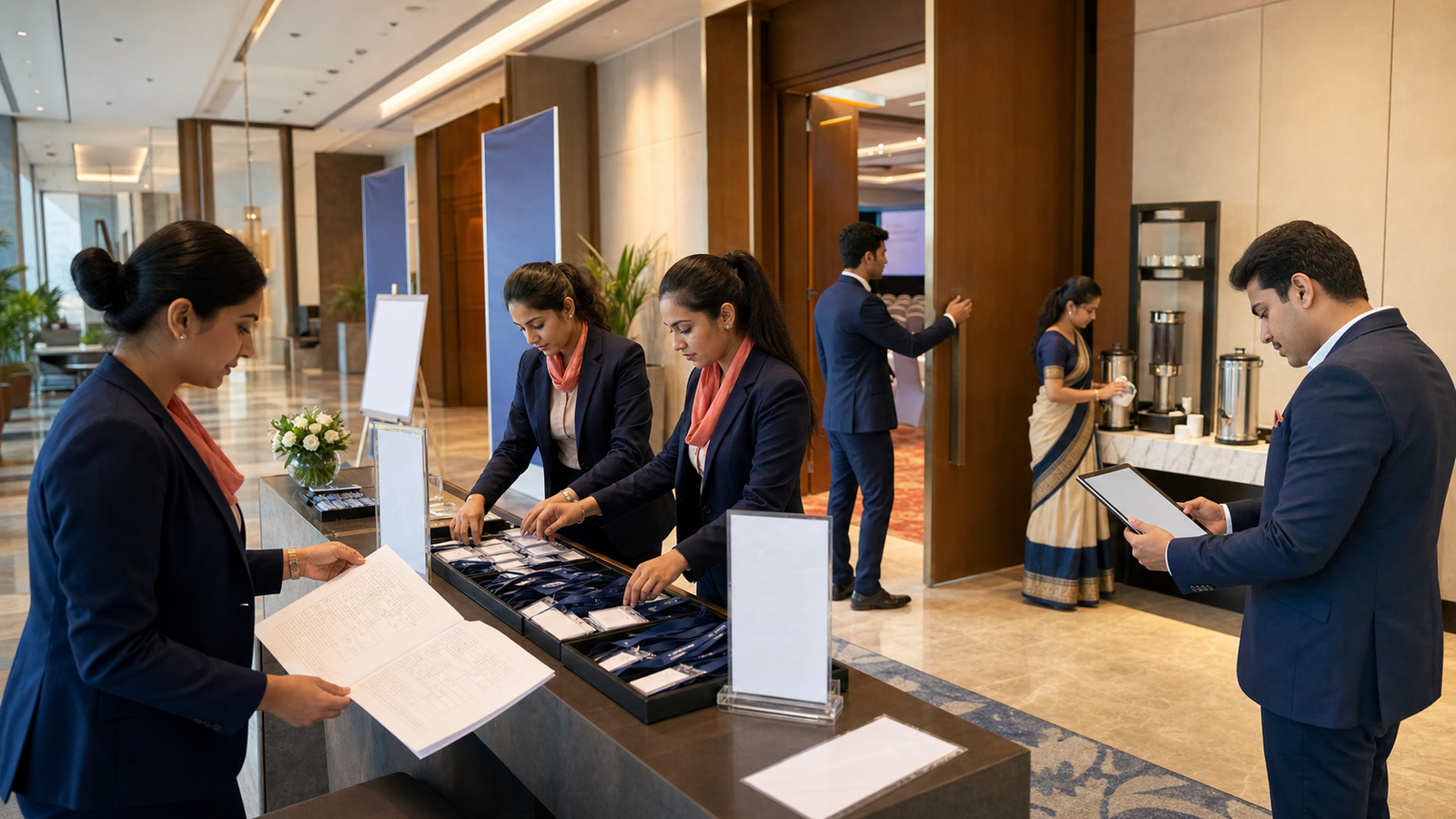
Build the staffing plan from the attendee journey
Walk through the conference as an attendee: arrival, registration, wayfinding, session entry, breaks, meals and departure. Note where people may wait, need information or move between spaces at the same time.
This journey reveals the operational work more clearly than one total headcount. A 300-person single-room seminar and a 300-person conference with breakouts, speakers and several meal zones need different teams.
Size registration for the arrival pattern
Registration demand depends on how quickly attendees arrive, whether credentials are pre-issued and how many exceptions require manual help. Separate fast badge collection from new registration, payment questions or missing-name resolution where possible.
Assign a lead who understands the registration system and escalation process. Hosts can support queues and distribute prepared materials, but account changes, payment decisions and access approval should remain with authorised organisers.
Place hosts where attendees make decisions
Useful host positions include the main entrance, registration exit, lift or corridor junctions and breakout-room clusters. These are the points where clear directions prevent congestion and late session arrivals.
Give every host the current agenda, venue map and approved answers to common questions. If the programme changes, update the complete team through one channel instead of relying on attendees to spread the news.
Assign session and speaker support separately
Session support can include checking room readiness, coordinating entry, tracking capacity, assisting moderators and escalating technical issues. Speaker support may involve arrival coordination, green-room guidance and confirming the correct room and time.
Do not treat event helpers as audio-visual technicians unless they have been engaged for that specialist work. Define the handoff to the venue or production team for microphones, presentations, lighting and connectivity.
Plan transitions, not only sessions
The busiest operational moments often occur between sessions when many attendees leave, seek refreshments and enter another room within a short window. Review corridor width, signage, lift capacity and competing queues.
Position staff before the transition begins and define which doors or routes they support. A concise radio or messaging protocol helps leads report congestion without filling the channel with ordinary updates.
Coordinate catering and hospitality zones
Confirm what the caterer or venue team provides at coffee breaks, lunch and networking service. Separately arranged event professionals may assist with guest flow, table clearing or defined service tasks, but food handling boundaries must remain clear.
Staggered breaks, multiple counters and dietary-help points can reduce pressure. Give the hospitality lead the session schedule so service readiness matches actual release times rather than the original agenda alone.
Prepare for attendee questions and exceptions
Staff should know where to direct questions about accessibility, lost property, medical assistance, transport, certificates and programme changes. Provide escalation contacts without expecting every professional to hold private attendee or company information.
Create a short exception guide for likely scenarios and identify who can make decisions. Clear escalation protects attendees and prevents frontline staff from inventing answers under pressure.
Use shifts that match the operating day
Conference work begins before doors open and may continue through room reset, material collection and closing checks. Set reporting times for security entry, uniform checks, briefing and movement to assigned positions.
For long programmes, plan breaks and handoffs so registration, information and session doors remain covered. Record any approved extension rather than assuming the opening team can remain until the final vendor leaves.
Brief by zone, role and escalation path
A useful briefing confirms the agenda version, venue zones, assigned position, tasks, dress, breaks, communication method and immediate lead. Share only the attendee information required for the role and protect registration data from unnecessary access.
Run a short venue walkthrough where practical. Seeing emergency exits, washrooms, session rooms, service corridors and organiser desks makes a written map much easier to use once attendees arrive.
Review evidence after the conference
Capture attendance, approved role changes, queue peaks, delayed sessions, room-capacity issues and lead feedback. Compare the plan with what actually happened rather than rating the team from general impressions alone.
Use the review to improve registration windows, zone quantities, briefs and transition plans for the next event. A documented operating history turns each conference into better forecasting instead of starting the staffing plan from zero.