
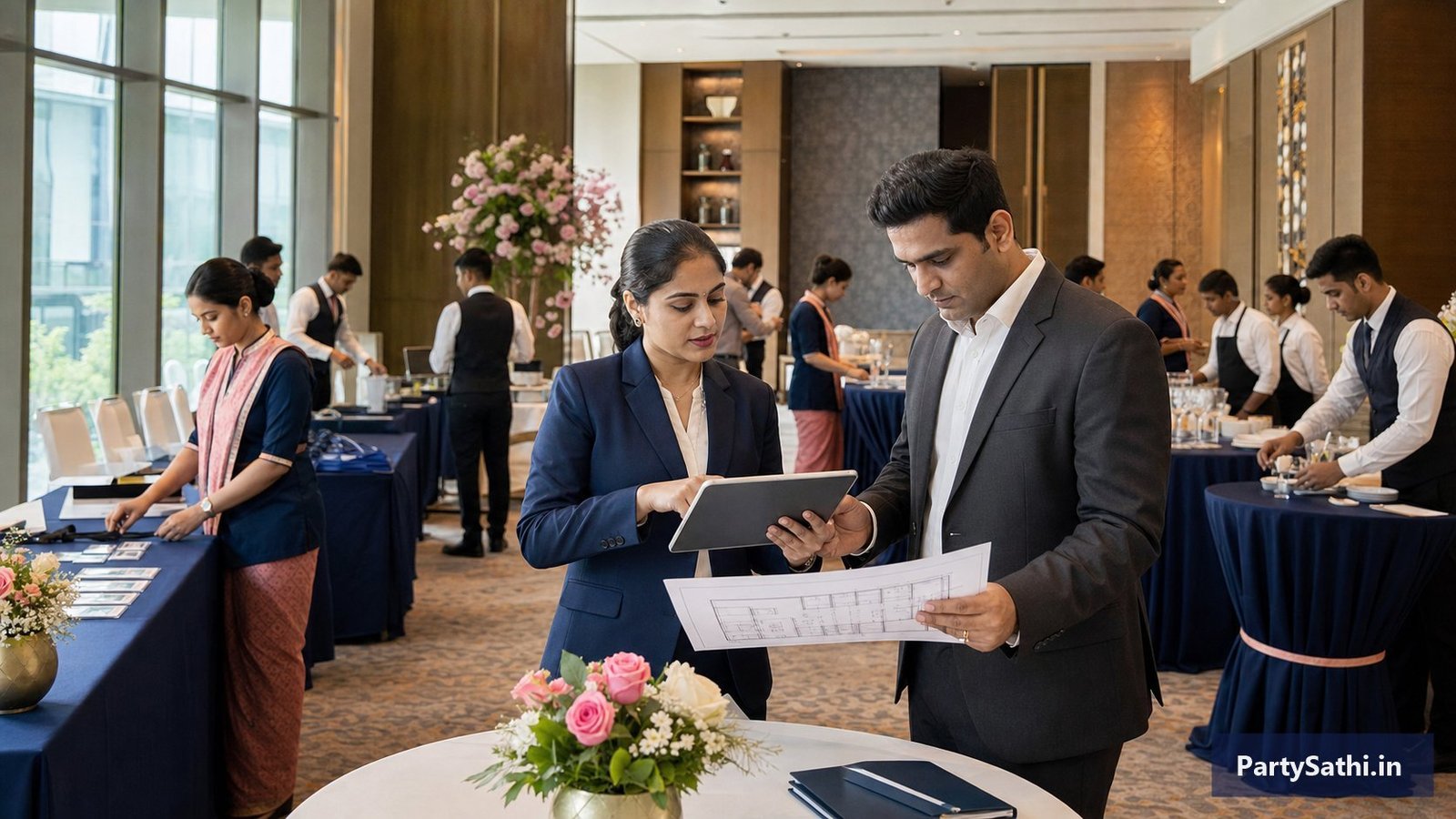
What on-demand event staffing means
On-demand staffing allows a business to request event professionals for a defined requirement rather than maintaining every role as permanent headcount. It can support a single conference, a product launch, a seasonal increase or a recurring schedule with changing quantities.
The model is most effective when flexibility is paired with operational discipline. The business still needs a clear brief, realistic lead time, appropriate supervision and a documented process for changes, attendance and completion.
Start with the operating requirement
Describe the event format, venue, dates, expected attendance, service areas and guest journey before selecting quantities. A registration desk, networking reception and seated dinner each create different work and timing.
Separate guest-facing roles from setup, logistics and closing support. This helps the staffing team understand where specialist experience matters and where flexible event helpers may be suitable.
Translate the plan into roles and shifts
Define each role by its actual tasks rather than its title alone. For every shift, include reporting time, expected finish, break arrangement, dress requirement, supervisor and the location where the professional should report.
Account for preparation and handover time. If guests arrive at 6:00 PM, the host and registration team may need to be briefed substantially earlier, while closing support may continue after the public programme ends.

Share one structured requirement
Use a central requirement that records role quantities, shift timings, location, responsibilities and commercial terms. Avoid distributing different versions through separate personal messages, because small inconsistencies can become operational problems on the event day.
Nominate one business contact for approvals and one on-site contact for execution. If the scope changes, update the central requirement and confirm who has accepted the change.
How matching and confirmation typically work
The staffing provider reviews the requested roles, location, timing and available supply before confirming what can be fulfilled. Suitability may consider profile information, experience, service area, availability and any requirement-specific checks.
A request should not be treated as confirmed until the assigned quantity, reporting details and commercial arrangement are recorded. Businesses should also understand the applicable replacement, cancellation and escalation process.
Coordinate attendance and the event-day briefing
Before the shift, confirm the reporting point, supervisor and contact method. At arrival, complete attendance through the agreed process and give one concise briefing covering priorities, venue rules, guest flow and escalation.
Keep instructions consistent and route changes through the supervisor. Professionals work more effectively when they know who is directing the shift and which decisions require approval.
Close the shift with complete records
Record attendance, approved timing changes, completion status and any incident or service issue while the details are fresh. Review these records before approving invoices or payouts under the agreed workflow.
For recurring requirements, compare planned and actual quantities, late changes and operational feedback. This creates a stronger basis for forecasting the next event instead of rebuilding the plan from memory.
Know when the model is the right fit
On-demand staffing can suit variable event calendars, multi-role requirements and businesses that need additional capacity around peak dates. It does not remove the need for venue management, specialist licences, safe working conditions or internal ownership.
If the requirement is frequent or large, discuss a recurring workflow with clear lead times, account responsibilities and invoicing arrangements. A structured partnership may be more reliable than treating every event as an isolated urgent request.