
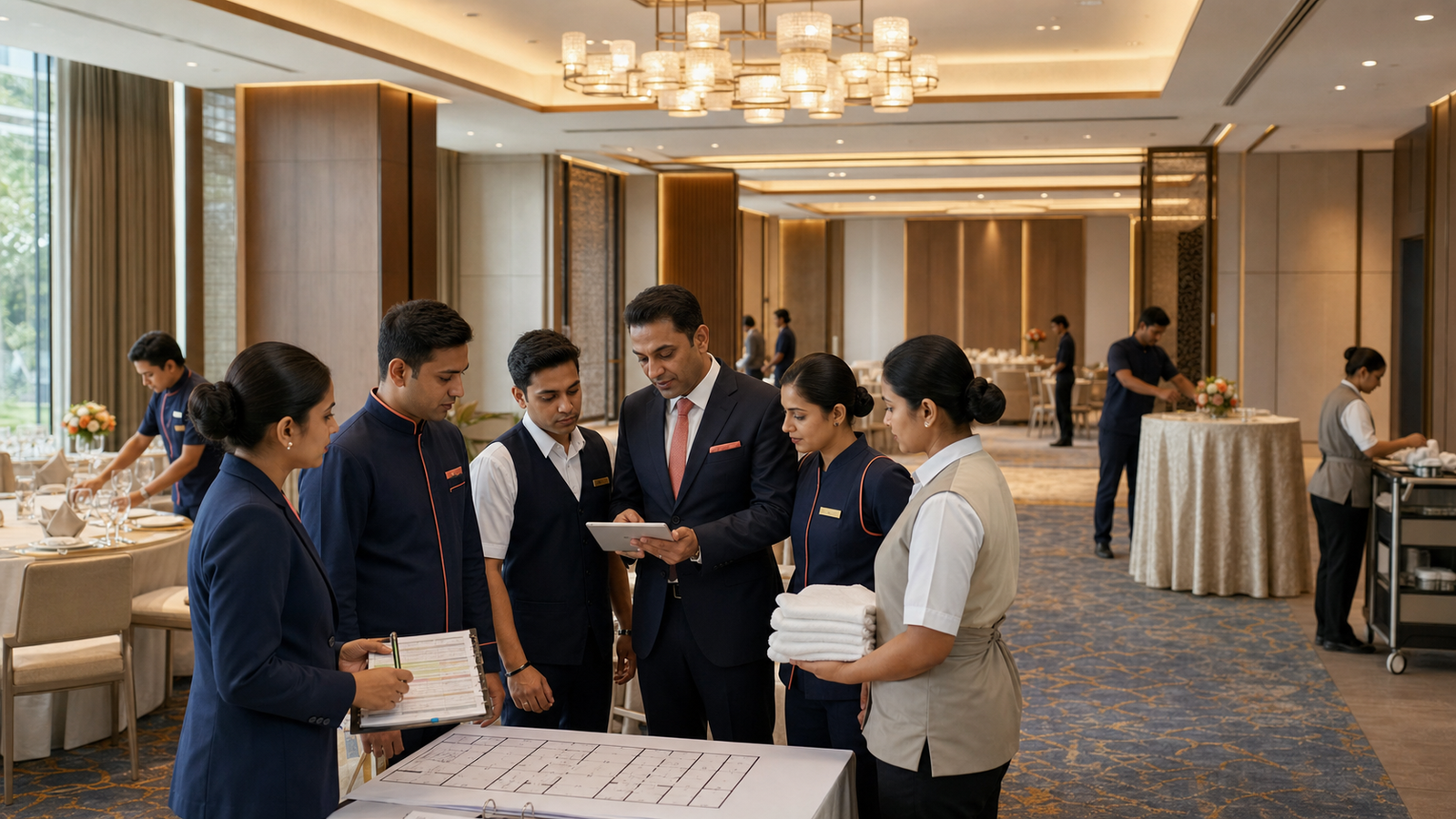
Start with the confirmed function calendar
A venue staffing plan should begin with the latest function sheet or event calendar, not a generic daily headcount. Record the room, guest count, service format, setup, start and closing time for every confirmed function, then identify tentative events that may still affect capacity.
Review the calendar at a consistent operating interval. A weekly forecast supports sourcing and roster planning, while a final daily review captures guest-count changes, room moves and revised service timings.
Separate baseline staff from flexible demand
Permanent or regularly scheduled employees may cover supervision, property knowledge and essential daily operations. Flexible event professionals can add capacity when several halls operate together, guest counts rise or a function requires additional service zones.
Define the work each group owns. Flexible staffing should solve a measurable capacity requirement rather than compensate for an unclear schedule, missing equipment or responsibilities that no department has accepted.
Convert every function into role quantities
Translate the service plan into waiters, hosts, event helpers, bartenders, housekeeping professionals and any other required roles. Guest count is important, but plated service, multiple counters, long kitchen routes and simultaneous room turns can increase the workload.
Use the venue’s own operating history to improve estimates. Compare planned quantities with actual attendance, service delays, supervisor feedback and closing time from similar functions rather than relying forever on one industry ratio.
Build staffing around venue zones
Map guest entrances, pre-function areas, halls, buffet or beverage counters, service corridors, washrooms and closing areas. Assign each professional to a zone, shift and lead so that responsibility remains visible when several events overlap.
Large venues may also need a controlled floating team for short demand peaks or room resets. Define when that team can be moved and who has authority to reassign it; otherwise every supervisor may plan around the same people.
Standardise role briefs without making them vague
Create a concise venue standard for each role covering uniform, reporting point, permitted tasks, equipment, service sequence, guest interaction and escalation. Then add the function-specific details that change from event to event.
A standard should make expectations repeatable, not turn every role into “general support.” Keep boundaries clear around food preparation, alcohol service, cash, security, heavy equipment and access to private guest or staff areas.
Nominate accountable floor leadership
Every active function should have a venue lead who can brief the team, answer operational questions and approve practical adjustments. For larger temporary teams, identify a staffing lead who maintains attendance, zones and communication with the venue.
Give both leads the same latest function information. When instructions bypass the agreed chain, professionals may receive conflicting priorities from sales, banquets, catering, decor and the client’s event planner.
Design realistic reporting and handoff times
Reporting time should allow for security entry, changing, attendance, briefing and movement to the assigned zone before service begins. Back-to-back functions also need a planned handoff so one team does not leave before the next has received the current room status.
Record meal breaks, shift extensions and closing responsibilities. Late-running events are common, but relying on unplanned extensions creates fatigue, transport problems and disputed hours.
Keep attendance and changes connected to the shift
Maintain a reliable record of who reported, arrival and completion times, assigned role and approved changes. If a professional is moved between halls or asked to extend, capture the responsible approver and updated requirement.
Connected records support accurate invoices, payouts and performance review. They also reduce the time spent reconstructing an event from calls and informal messages after a quantity or timing dispute.
Review service quality with useful evidence
Collect structured feedback from floor leads on punctuality, briefing readiness, task completion, guest interaction and compliance with venue standards. Separate a professional performance issue from a planning failure such as an understaffed zone or late equipment setup.
Use repeated patterns to improve future rosters and briefs. Feedback should guide fair development and selection, not become an undocumented blacklist based on one vague complaint.
Create a repeatable staffing operating rhythm
A practical rhythm can include a weekly demand forecast, role confirmation, final function review, shift-level briefing, attendance capture and next-day exception review. Keep one current version of the requirement available to sales, banquets and staffing coordinators.
The objective is not simply to find more people. It is to place appropriately briefed professionals into defined roles at the right time, preserve venue standards and maintain enough evidence to improve the next function.