

There is no single booking window for every event
The useful lead time depends on the date, city, venue, event format, selected roles, quantities and shift timings. A small gathering with common hospitality roles may be simpler to coordinate than a multi-area event requiring a larger or more specialised team.
Starting earlier does not guarantee that every requested professional will be available, but it creates more time to clarify the requirement, review realistic options and adjust the service plan before the event becomes urgent.
Start planning as soon as the date and venue are stable
You do not need every decorative detail before considering staff. Once the event date, approximate timing and venue are reasonably stable, begin mapping the guest journey and the work that professionals will need to perform.
If the venue has service restrictions, multiple entrances, outdoor areas or several floors, collect those details early. They can affect reporting instructions, movement and the number of service areas that need support.
Allow more time for larger or complex requirements
Plan earlier when the requirement includes high quantities, several role types, long shifts, multiple venues or specialist responsibilities. Peak weekends, festival periods and dates with heavy event demand may also reduce flexibility.
Business events and recurring requirements need additional time for account setup, schedule review, approvals, invoicing arrangements and a repeatable communication process.
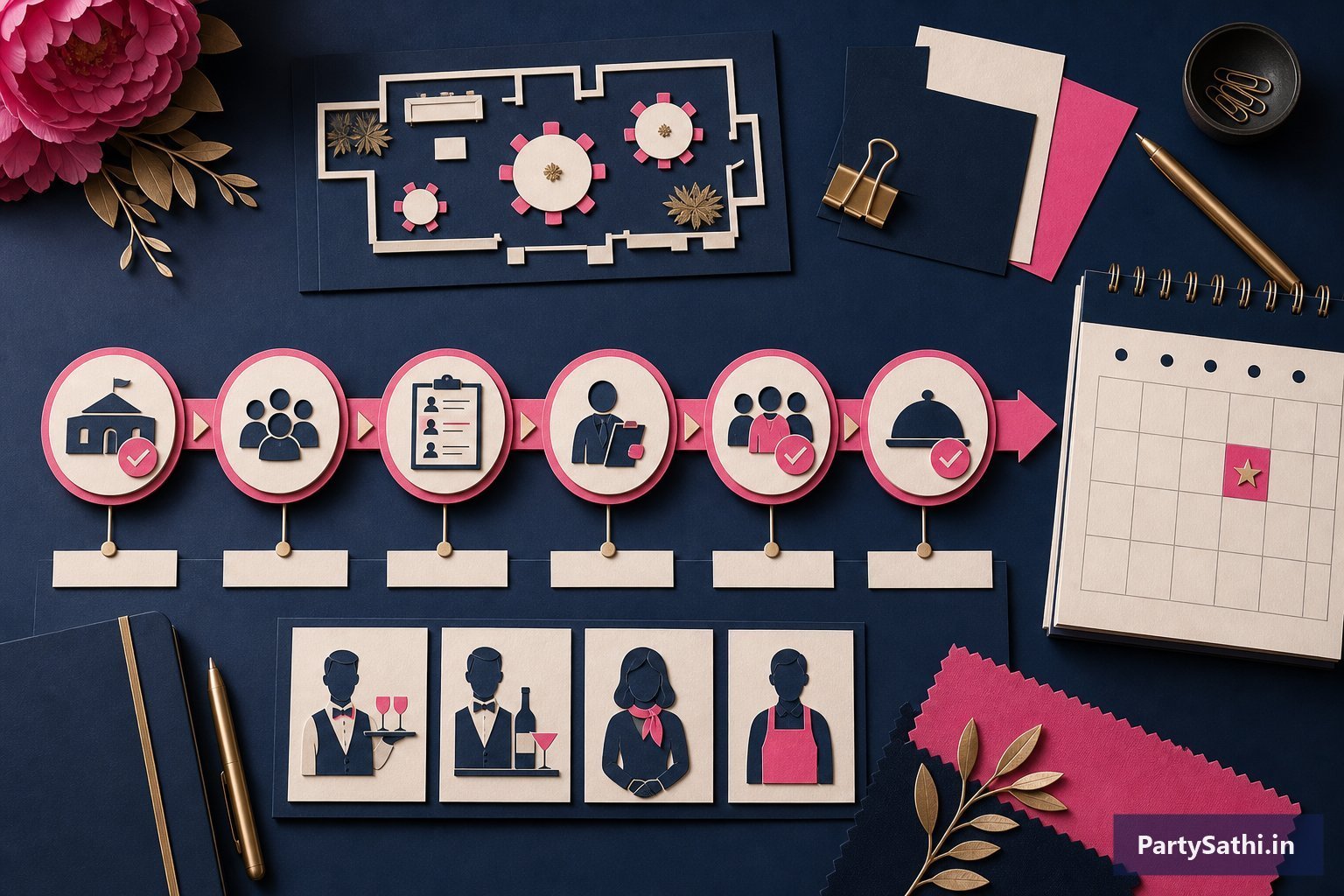
Use an early estimate before the final guest count
An approximate guest range is enough to begin a staffing conversation. Pair it with the service format, number of rooms and likely duration so the estimate has operational meaning.
Set a date for confirming the final headcount. If the number changes materially, review role quantities and service areas instead of assuming the original plan will still work.
Confirm roles by tasks, not titles alone
Explain what each person is expected to do, where they will work and who will supervise the shift. Waiter, host or event helper can describe very different workloads depending on the event.
Early task clarity helps identify whether you need common hospitality support or a specialist role that may require more preparation, experience or availability.
Build the briefing before the final week
Prepare the address, reporting point, shift timing, dress requirement, role priorities and on-site contact before the last round of confirmations. This reduces rushed messages and conflicting versions.
Keep one central written brief and update it when the venue, guest count or schedule changes. Professionals assigned later should receive the same current instructions as those confirmed earlier.
Recheck the plan as the event approaches
Before the event, confirm the latest role quantities, reporting time, location and primary contact through the agreed booking channel. Make sure the venue and internal organisers understand the same plan.
If a major change occurs, communicate it promptly and ask what can realistically be adjusted. Additional quantity or extended timing remains subject to availability and confirmation.
Keep a fallback for late changes
Guest counts, weather, venue access and programme timings can change even when planning began early. Decide which service areas are essential and which tasks can be simplified if the final requirement cannot be expanded.
A controlled fallback protects the remaining team from unrealistic workloads and helps the host preserve the most important parts of the guest experience.
Earlier planning improves decisions, not just availability
The main benefit of lead time is the ability to make informed choices. You can clarify responsibilities, review the complete shift, align the venue and reduce avoidable event-day confusion.
Submit the requirement once the key facts are stable, then keep it updated. Waiting for every minor detail can be as unhelpful as making an urgent request without the information needed to assess it.